Brexit, Germany and the long way home
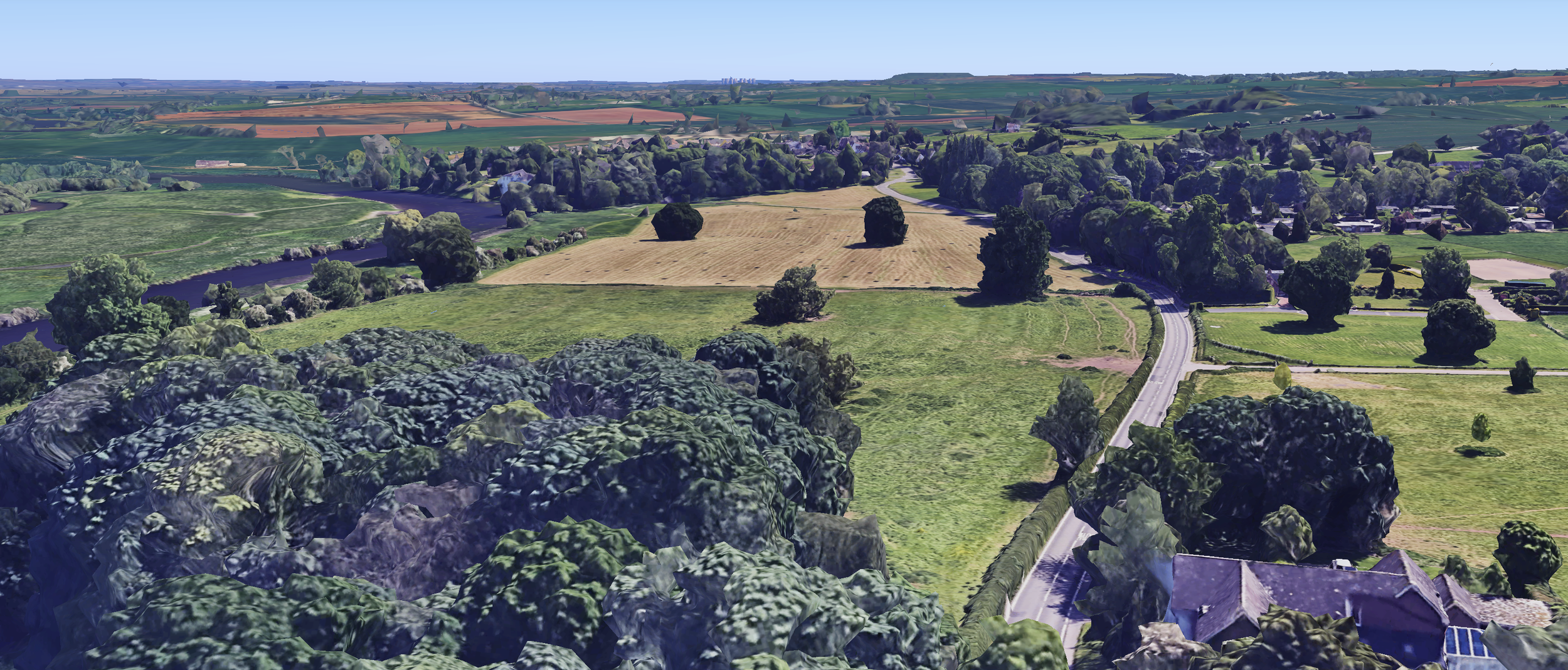
Google Earth view of Newton Solney, Derbyshire, United Kingdom, where the author is from.
In 2016 I was walking down Angel Road in London with a colleague. That morning I had been to Derbyshire and back again to vote Remain.
We talked about the referendum. In London it seemed impossible that Leave would win. But out in the countryside I had seen the signs. Large ones. TAKE BACK CONTROL. They were not background noise. They were declarations. Something was moving that London had not understood.
The next morning I punched a wall out of frustration. A colleague came into the office dressed head to toe in a Union Jack suit. Another colleague confessed to not having voted.
“I didn’t think we’d lose.”
That sentence has stayed with me more than most of the speeches.
The dominant assumption before the vote was apathy. People were disengaged. Politics was stale. The New Labour years - from Tony Blair’s landslide in 1997 to Gordon Brown’s defeat in 2010 - had left a strange residue of managed normality. Between 1996–97 and 2008–09, real household disposable incomes grew by an average of 2% a year. Health spending rose from 4.7% of GDP to 7.6%. Education spending rose from 4.1% to 5.7%. Things were not perfect. Iraq happened. The financial crisis happened. But there was still a residual belief that the country could be managed.
Then came austerity. From 2010 onwards, cuts to councils, welfare, legal aid, libraries, youth services, and local government changed the texture of the country. Even so, in retrospect, austerity still belonged to a familiar British pattern: managed decline, resentment, bad television debates, and the sense that nothing fundamental would break.
Brexit broke that assumption.
The referendum was held on 23 June 2016. Leave won by 17,410,742 votes to 16,141,241. The margin was 1,269,501 votes. Turnout was 72.2%, with more than 33.5 million ballots cast. It was not apathy. It was mass participation, just not the kind many of us expected.
I was studying for my master’s at the time. I remember hating what the country had done to itself. Nigel Farage, Jacob Rees-Mogg, Boris Johnson - people who had previously seemed like fixtures of the national circus - were suddenly central figures in the national argument.
But the more useful question is not why they became popular. It is why so many of us found it so hard to believe they could.
Part of the answer is class. Part of it is geography. Part of it is age, education, home ownership, local decline, and media diet. But beneath all that was something simpler. Britain no longer had a shared account of itself.
One country experienced Britain as London, universities, services, cheap flights, European colleagues, cultural liberalism, and a future that broadly pointed outward.
Another experienced it as closed high streets, insecure work, weak local institutions, falling trust, and an economy that seemed to reward people elsewhere. Immigration became the visible sign of a system people felt they could not control. Brussels became a name for distance. This does not make Brexit correct. It makes it intelligible.
Since then, the case for Brexit has had to survive contact with arithmetic. The Office for Budget Responsibility still assumes that Brexit will leave UK imports and exports 15% lower in the long run than they would have been inside the EU. It also assumes this lower trade intensity will reduce potential productivity by 4% over 15 years. A 2025 paper by Nicholas Bloom and co-authors estimates that by 2025 Brexit had reduced UK GDP by 6% to 8%, with investment 12% to 18% lower and productivity 3% to 4% lower than it otherwise would have been. Trade has not become simpler. In 2025, UK exports of goods and services totalled £930 billion and imports totalled £969 billion. The EU still accounted for 41% of UK exports and 49% of UK imports. The country left the bloc and remained structurally attached to it.
The immigration argument is no cleaner. Net migration, one of the central political symbols of the campaign, did not fall into some tidy sovereign order. It reached a record 906,000 in the year ending June 2023, according to the Migration Advisory Committee, before later falling sharply. By 2024 it was still far above the levels around the referendum period. Control turned out to be a more complicated thing than a slogan.
So this is the portrait of Britain before the referendum: tired, unequal, complacent, but still able to pretend it was basically coherent. London was too confident in its own reality. The rest of the country was too easily treated as atmosphere. And this is the portrait now: poorer than it needed to be, still arguing about the same wound, and unable to say clearly what would count as resolution.
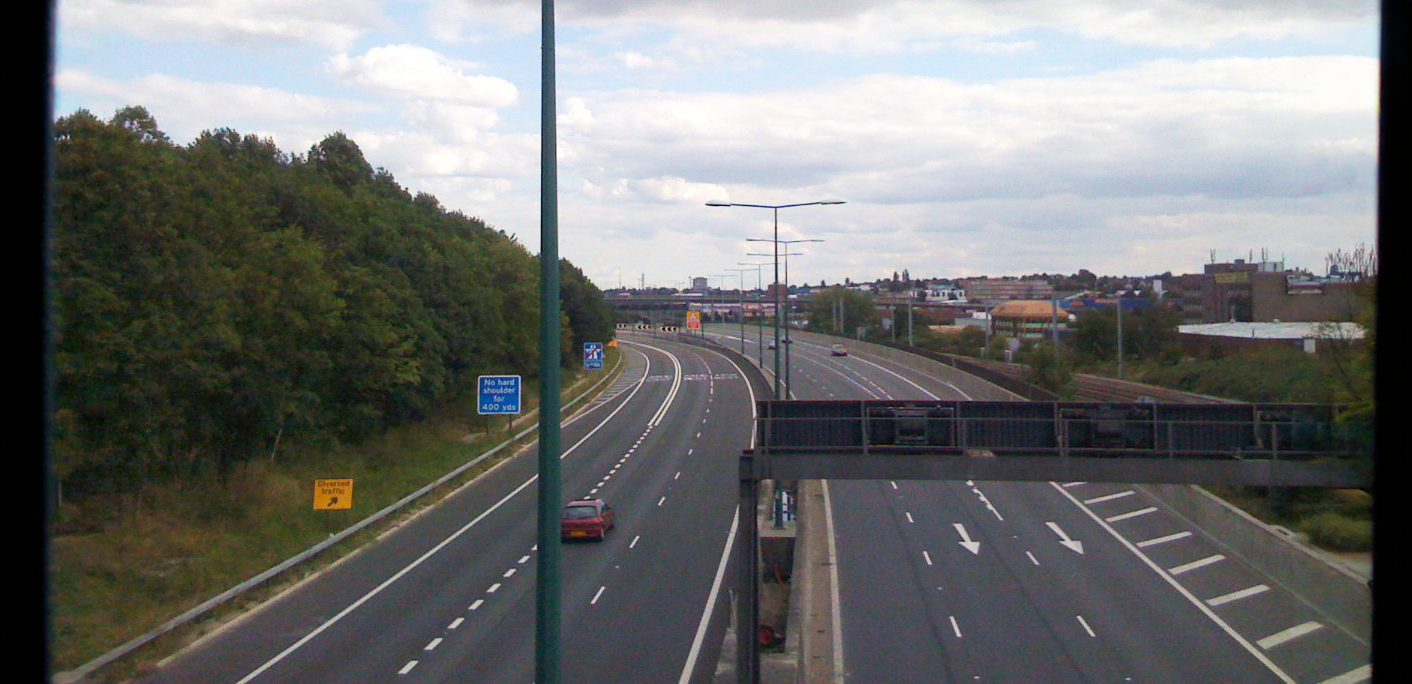
When people ask me what Brexit means now, I usually say it is like the country decided to move the M1 motorway one mile to the right. Benefits of this can be argued, but mostly it is just a complex waste of time.
In 2018, after finishing my master’s at Goldsmiths, I left the UK for Germany. I did not leave as a grand political gesture. I left because I no longer recognised the country I lived in, and because I had already had some sense of what life on the continent could do to a person.
In 2007, I had studied in Kraków on Erasmus. The programme had started in 1987 with 3,200 students. By 2007 it had become part of normal European life: moving to another country, studying there, making friends there, and feeling connected to the continent in a way that was not really available at home. Living in Kraków changed the scale of things for me. Not in a sentimental way. It made Europe feel ordinary. Trams, bars, cheap rooms, train stations, and the feeling that you could keep moving.
I went to Berlin and remember standing near the Brandenburg Gate, feeling it as a marker between east and west. I remember the cold air and imagining it coming all the way from the Russian steppe. I went to Istanbul and stood on the Asian side of the Bosphorus looking west. I still think that is the moment any westerner catches Orientalism. You look back at Europe from the wrong side of your own mental map and realise how much of it was theatre. Then I went back to Derbyshire. I remember sitting in the pub in the village and feeling, very distinctly, that I was stuck on an island.
I do not mean that as an insult to islands. Britain’s geography has shaped it. Of course it has. But there is a psychological barrier to water. On the continent, borders are not theoretical. You cross them. You sit on trains through them. You buy a coffee in one language and a sandwich in another. The geography changes how you think. Britain has always been able to treat Europe as optional in a way Germany cannot. France cannot. Poland cannot. The Netherlands cannot. That does not make those countries wiser or better. Europe has produced enough stupidity, blood, bureaucracy, and uniforms for any serious person to distrust romance. But the continent does make neighbouring countries harder to ignore.
After moving to Germany, my integration was imperfect. My German remains worse than it should be. That is on me. But culturally I adapted more than I expected. I became used to the continental scale of things. Trains crossing borders. Cities connected by habit rather than myth. A few hours in one direction gets you Prague, another gets you Vienna, another gets you Amsterdam or Paris or Warsaw. The Schengen Area now includes 29 countries: 25 EU member states and four non-EU states. It is not perfect, and it is not permanent by divine law. Germany has reintroduced temporary border controls in recent years, partly under pressure over migration and security. Still, the basic fact remains extraordinary. Across much of Europe, the border is less important than the journey.
Friends in Berlin used to make jokes about England. Rainy fascism island. Rainy transphobe island. I did not like it. Even when I agreed with part of the criticism, I felt the old defensive twitch. You can hate your country and still resent someone else doing it lazily.
Then I returned to Britain by bus. Union Jacks everywhere. Hostile border staff. A strange theatricality around entry. Flags, uniforms, monarchy, suspicion. From the outside, the UK did not look like a great power. It looked like a small principality off the coast of Europe with unusually expensive delusions. I am terrified of flying, so I have spent years crossing Europe by train and coach. I took a FlixBus from Berlin back to the UK through the Channel Tunnel. It was the first time I had really entered Britain as an outsider.
The monarchy. The archaic procedure. The national anthem. The permanent Second World War mood music. The idea that Britain is both ordinary and exceptional, both victim and victor, both global power and plucky underdog. From inside, these things feel like atmosphere. From outside, they look like costume.
Brexit sharpened this. It made the country look smaller. Not because small countries are ridiculous. They are not. Denmark is small. The Netherlands is small. Ireland is small. The difference is that Britain seemed determined to perform bigness while reducing its actual room for manoeuvre. This is why I do not think Brexit will ever have one meaning. It was too overloaded for that. Some people wanted it as an anti-capitalist break from EU market discipline. Some wanted it as an immigration policy. Some wanted parliamentary sovereignty. Some wanted an English restoration. Some wanted to annoy the right people. Some wanted a country they recognised and were willing to invent one backwards.
The question underneath all of it was older than the referendum. Is openness a threat, or is separation a fantasy? I have become less sentimental about the nation state since leaving Britain. Not because I think identity disappears. It obviously does not. Everyone has an accent, a memory, a food they get stupid about, a landscape they recognise before they understand why. Traditions are real. They are also not a sufficient basis for organising power.
Europe now reminds me of Germany before unification. Before 1871, the German lands were divided into kingdoms, duchies, principalities, free cities, and competing sovereignties. The settlement that became the German Empire was not inevitable, and it was not innocent. It came through war. But it showed something basic about political form: systems grow when older containers stop matching the scale of economic, military, and administrative reality.
Europe is now caught in that mismatch. There is no serious long-term reason for France, Germany, Spain, Italy, the Netherlands, and the rest to maintain entirely separate strategic systems as if the 19th century were still the natural unit of history. Separate armies. Separate procurement. Separate tax systems. Separate industrial policies. Separate parliaments trying to regulate problems that already crossed the border decades ago. This is not an argument for flattening culture. Keep the languages. Keep the food. Keep the local holidays, the saints, the village festivals, the regional grudges. But power has to be built at the scale of the problem.
Climate is continental. Defence is continental. Migration is continental. Energy is continental. Technology is continental at minimum, and often planetary. Tax avoidance is not impressed by flags. Neither is capital. Neither is data. Neither is war.
The EU already knows this, even if it cannot always say it plainly. Permanent Structured Cooperation was established in 2017 and now includes 26 participating member states working on joint defence capability development. It is a bureaucratic name for an obvious fact: Europe is being pushed toward military integration because the alternative is strategic weakness. Brexit tried to move the other way. Back to the nation. Back to the border. Back to the island. Back to control. But the world does not appear to be moving back.
Systems grow to the limits of the technology beneath them and the imagination above them. A baron could control a patch of land because that was the practical radius of force, tax, and communication. A kingdom could grow larger because administration, roads, armies, and law grew larger. The modern nation state made sense when print, railways, mass schooling, industrial war, and central bureaucracy made it make sense. Now the scale has shifted again.
The problem is that our institutions still think in borders, while the systems around them operate in networks. Supply chains, banking, cloud infrastructure, disease, carbon, migration, war, information. None of these respect the old map except where they are forced to. This is why, after seven years on the continent, I find British nationalism not frightening exactly, but embarrassing. It feels defensive. A small country insisting on its own grandeur because it cannot bear the administrative truth of its size.
Britain should be part of Europe completely. Not half-in, half-out. Not special status. Not endless opt-outs, rebates, resentments, and speeches about sovereignty delivered to people who have already left the room. Completely.
Europe, too, has to become something more serious than its current arrangement. Not because Brussels is beautiful. It is not. Not because technocracy is inspiring. It rarely is. But because the alternative is a museum of states pretending to be sovereign while the real decisions happen elsewhere. Europe has to disband itself and be born again.
Britain should stop standing on the beach pretending Europe is optional.
After seven years in Germany, I am leaving again
Berlin first. Then Munich. Now Rotterdam.
In Berlin, I learned a certain kind of continental life. Not integration exactly. My German never became what it should have become. But Berlin has its own logic. The greyness mulches people together. The city is full of people who are not from there, which becomes, eventually, a form of belonging. Not warm belonging. Not village belonging. More like tolerated drift.
Munich was different. Bavaria does not mulch anyone. Bavaria remains Bavaria at all times. You cannot escape the Bavarian-ness of Bavaria. The flags, the dialect, the mountains, the Catholic architecture, the beer halls, the sense of local pride that is both impressive and exhausting. It is not Germany in general. It is a place with its own gravity.
After seven years on the continent, I know more than I did. I also know less. Baudelaire, or someone misremembered as Baudelaire, is supposed to have said that the more one knows, the less one knows. My exploration of Europe has been like that. Every country opens another complication. Every border crossed makes the map larger, not smaller.
I have travelled across Europe by train and bus because I do not fly. From Berlin, from Munich, through stations, tunnels, service stations, borders that sometimes matter and often do not. The Schengen Area now covers 29 countries: 25 EU member states and four non-EU countries. That means a large part of the continent can be crossed without routine internal border checks. It is easy to become casual about something historically strange.
The movement changes you. Not all at once. Not romantically. But slowly. You start to understand that national identity is real and also insufficient. People have languages, habits, foods, jokes, bureaucracies, memories, things they consider obvious that are not obvious at all. But they also live inside systems that already exceed the nation. Now I am on my way to Rotterdam to start a family.
My child will be born to a Slovakian-Hungarian mother and an English-German father. Hungarian, Slovakian, Dutch, German, British. A real child of Europe. Not as an idea. As paperwork. As blood. As language. As tax forms. As grandparents. As a future argument about which passport is most useful.
At my darkest moments in Germany, I often thought: I just want to go home. But there is no home except what you are prepared to fight for. Or if there is, it is not the thing people usually mean when they defend it. Home is not only birth. It is repetition. It is the street you learn, the shop you use, the language you slowly fail at until you fail less, the people who expect you to come back.
Leaving the place of your birth is still hard, even when you wanted to leave. Maybe especially then. I am wary of comparing myself too neatly with migrants who have crossed borders under far worse conditions. I am a privileged tech worker. Nobody should confuse my FlixBus sadness with survival. But I do think leaving teaches something that staying cannot. To leave where you are from, even if you hate it, is still a kind of heartbreak. It may not hit you at the moment. It may arrive years later, in a supermarket, or on a train, or when someone says the name of a place you thought you had outgrown.
I am from a village in Derbyshire. I left it. Then I left England. Those are not the same departure, but they rhyme.
In Bavaria I met people who had barely left Bavaria. In Derbyshire I knew people who had barely left Derbyshire. In Newcastle, when I was doing my bachelor’s, I thought I understood the world. I did not. I was narrow. I was provincial in the way many young men are provincial: loudly, and with opinions. Small places are not the problem. Great things can happen in small places. People can live good lives there. The problem is when smallness becomes a theory of the world. This is where the migration argument becomes difficult.
In the village where I am from, around 60 Afghans were housed in a hotel for, I think, two years. They were there, but not really part of the place. The government had put them there. They were not allowed to work properly. There was no serious integration. The villagers were not, as far as I could tell, uniformly hostile. But they were suspicious, because a group of people had been inserted into the village by a system that explained almost nothing and expected everyone to pretend the arrangement made sense. That is not openness. That is bad administration.
This is one reason I do not trust the clean versions of either argument. “Open everything” is not a policy. “Close everything” is not a policy either. One is a mood. The other is a locked door pretending to be a theory of society. Europe already lived through this in 2015. Germany’s migration report recorded 2.14 million arrivals in 2015 and a migration surplus of 1.14 million people. It also recorded 476,649 asylum applications, more than double the previous year. The initial EASY distribution system registered as many as 1.1 million asylum-seeker arrivals, though that figure included multiple registrations and was later understood as inflated.
Britain received far fewer people, but Brexit politics absorbed the shock anyway. That is one of the strange facts of the period. Germany took the administrative burden. Britain took the fantasy version and turned it into a referendum.
A proper European state might have handled that moment differently. Not perfectly. Nothing involving millions of displaced people is clean. But distribution, housing, work rights, language teaching, and integration could have been treated as continental state functions rather than a series of national improvisations and local resentments.
Migration is not new. Between 1820 and 1920, more than 30 million Europeans migrated to the United States. The backlash was real. Irish, Italian, Polish, German, Jewish, Catholic, poor, foreign-language migrants were treated, at different points, as threats to the republic. The Know Nothing movement of the 1850s was built around anti-Catholic and anti-immigrant politics. Later came the quota laws of the 1920s. Now the United States tells itself a national story about immigration, usually badly, but it is impossible to understand its power without it.
This does not mean all migration is easy or that every society can absorb any number of people at any speed. That is not serious. But it does mean that people often mistake the difficulty of integration for proof that integration cannot work. Brexit appealed because it seemed clear.
In or out. Control or chaos. Them or us. Border or no border. That was its genius as propaganda. It turned a set of hard administrative, economic, cultural, and demographic questions into a door marked Exit. But it was never clear. It only felt clear.
Some people wanted a socialist Brexit. Some wanted a deregulated Singapore-on-Thames. Some wanted lower immigration. Some wanted parliamentary sovereignty. Some wanted to hurt David Cameron. Some wanted to punish London. Some wanted to keep Britain as they imagined it had been before they had to hear Polish in the supermarket.
What I think now, after seven years on the continent, is that I have become European. Not in the abstract federalist poster sense. Legally, bureaucratically, socially, and soon through family. My life is no longer organised by the island I came from. I do not know when I will return to the UK. I am not sure I want to yet. In 2007, after Kraków, I went back to Derbyshire and felt I was in a village. Now I worry I would go back and feel that the whole country has become that village. Defensive. Suspicious. Still capable of kindness, still capable of beauty, but smaller than it thinks.
This is not only Britain’s problem. Bavaria has its own version. So does every place that mistakes continuity for truth. But Britain made the mistake politically. It took the village instinct and gave it a referendum. Jacob Rees-Mogg is useful here because he is almost too obvious. The manners. The suits. The 19th-century affect. The confidence of a man who sounds educated and mistakes that for understanding. I know that type. I went to school with versions of it. It can be funny on YouTube when someone is explaining which fork to use. It is less funny when that temperament gets power over the lives of people who actually have to move, work, rent, cross borders, apply for visas, and live with the consequences.
There is a difference between knowing the world as an idea and knowing it because you have had to live somewhere else. I do not claim heroism for leaving. Again, I am not the right martyr for this argument. But I do think Britain was led into Brexit by people with very little imagination about what leaving means. Not leaving for a weekend. Not leaving for a conference. Leaving as rupture. Leaving as bureaucracy. Leaving as loneliness. Leaving as reassembly.
The nation state is not dead. People keep declaring things dead that remain inconveniently alive. But the nation state is no longer enough. The problems are too large, the systems too connected, the money too fast, the climate too indifferent, the wars too networked, the tax arrangements too slippery, the data too mobile.
Europe must unite because the scale of politics has changed. Britain should be part of that. Not as a favour to Europe. Not as an act of repentance. As a basic recognition of reality.
My child will not inherit a simple map. Simple maps have caused enough damage.
The time of the nation state is over. Europe must unite or die.