Zeitung für Deutschland: There can be no European tech sovereignty until Europe gets its act together
It's 19:45 and I am sitting on a delayed train at Frankfurt Hauptbahnhof, having arrived on another train that was first delayed and then partially cancelled somewhere between Munich and Cologne.
FRANKFURTER ALLGEMEINE ZEITUNG FÜR DEUTSCHLAND, it says in enormous letters across the train shed. Well, here's some Zeitung.
Technological sovereignty is not a software category. It is not achieved by passing another regulation, funding a handful of AI start-ups or commissioning a sovereign cloud.
Sovereignty is the ability to make a decision - and cause something to happen.
A continent that cannot reliably move people between its major cities, construct power lines, renovate buildings, procure weapons together or turn scientific discoveries into globally scaled companies will not become technologically sovereign by rhetoric.
The future belongs to crowds: The only viable mental model for an AI powered team
AI transformation cannot be planned like a campaign, a webinar series, or a conventional change programme. As AI reshapes language, work, communication, and decision-making, teams need a different mental model: one built on openness, shared experimentation, and collective intelligence. Taking Don DeLillo’s line “the future belongs to crowds” as a starting point, this article argues that AI-powered teams must stop waiting for perfect top-down strategy and start walking into uncertainty together.

In the future, every Brand Machine will need a Brand Brain
In my last piece, I wrote that in the future every brand will be a machine.
Since then, I came across Thomas Marzano’s work on Agentic Branding and the Brand Brain. Marzano’s point is sharper than the usual AI-brand fog: if brands are becoming machines, they need memory, governance, and operating logic.
A brand cannot simply “sound like itself” anymore. It has to be retrieved correctly. By search systems. By AI assistants. By agents. By procurement tools. By whatever machine now stands between a company and a customer.
The Brand Brain is the memory layer. The Brand Constitution is the law.
Without memory, the brand forgets itself.
Without law, it misbehaves.
Without both, it becomes fluent sludge.

In the future, every brand will be a machine
In the age of generative search and agent-mediated spaces, brands are no longer built only for people. They are increasingly interpreted, retrieved, and represented by machines. This article argues that the next evolution of brand is not the campaign, the chatbot, or the avatar, but the brand machine: a governed system built on verified knowledge, queryable interfaces, and constitutional guardrails. Using Celonis’ Wil-Bot project as a case study, it explores what happens when expert knowledge becomes machine-legible, scalable, and always on.

The Egyptian Army and Palace Guardism
Palace guardism is what happens when a regime treats its army as both shield and threat. In Armies of Sand, Kenneth Pollack uses the idea to explain how armies built around regime security tend to damage the very qualities that make armies effective: initiative, candour, delegation, and trust.
Egypt’s performance in 1973 is the interesting case because it was not simple failure. Operation Badr was disciplined, limited, and operationally impressive. Egyptian forces crossed the Suez Canal, broke through the Bar-Lev Line, and shocked Israel. But when the war moved beyond the plan — beyond the rehearsed crossing, beyond the SAM umbrella, beyond the script — the old rigidity returned.
Brand teams need process intelligence before they need more AI
AI does not fix brand incoherence. It accelerates it. Before brand teams buy another tool, launch another pilot, or ask another model to “scale the brand,” they need to understand how the brand actually moves through the business: approvals, handovers, sales decks, product claims, regional edits, legal constraints, and all the small mutations that never appear in the guidelines.
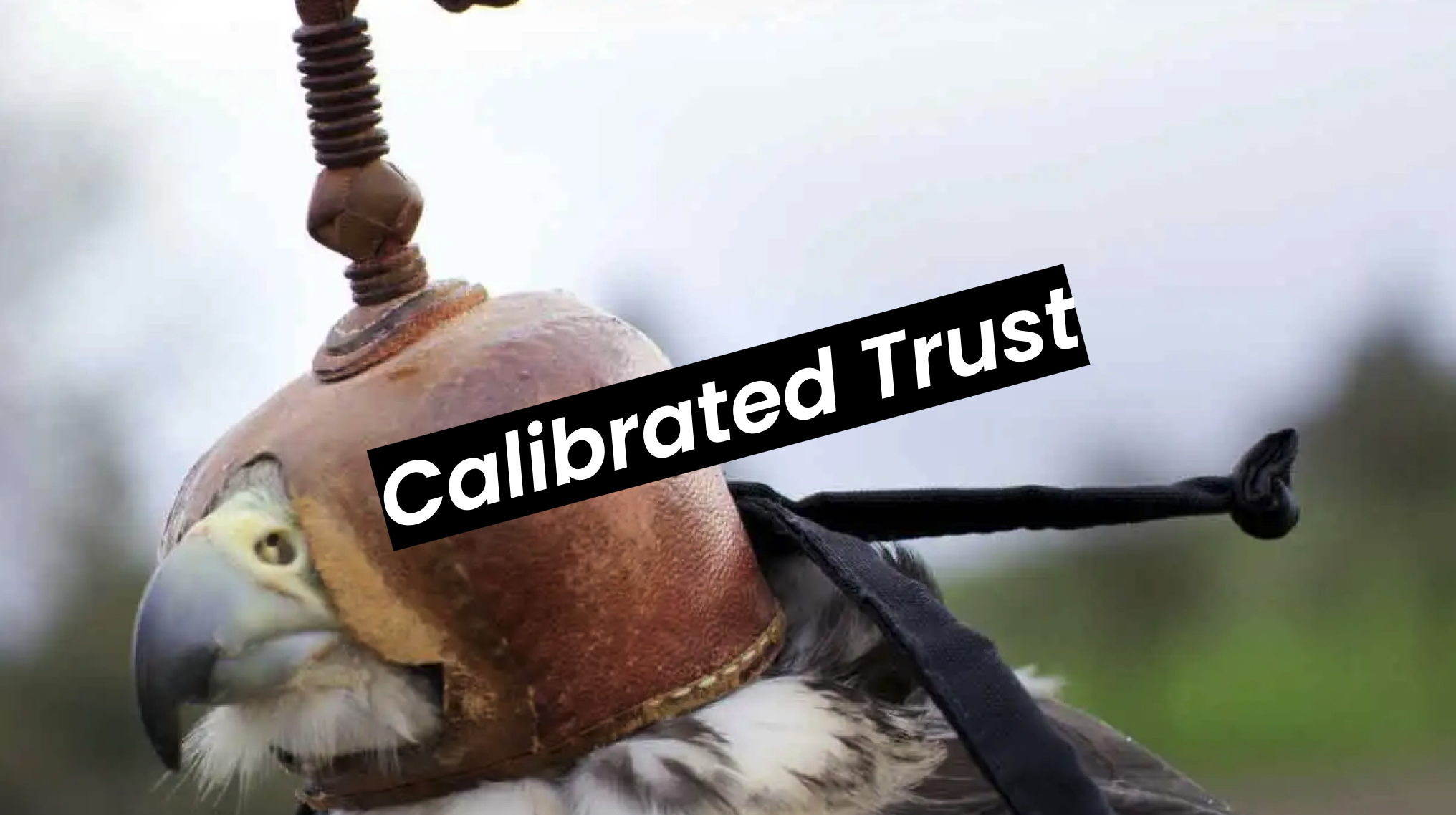
What do we mean by Calibrated Trust?
Calibrated trust is what becomes necessary when older, simpler forms of trust stop working. In AI and automation, the problem is not whether people trust a system. It is whether they trust it appropriately: neither surrendering judgment to the machine nor treating every output as poison. Trust has to match actual capability.

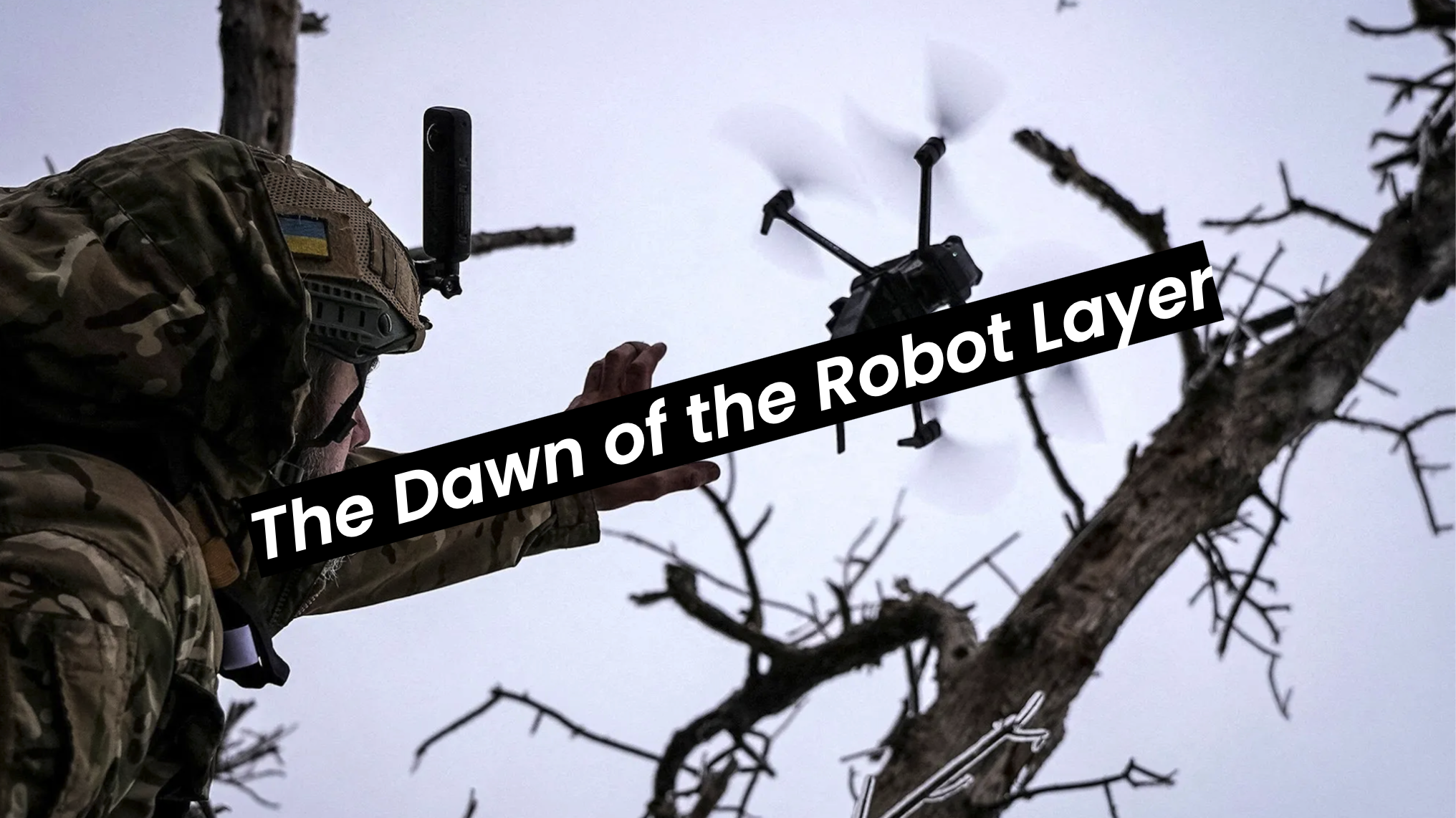
All’s Fair in Tech and War: The Dawn of the Robot Layer
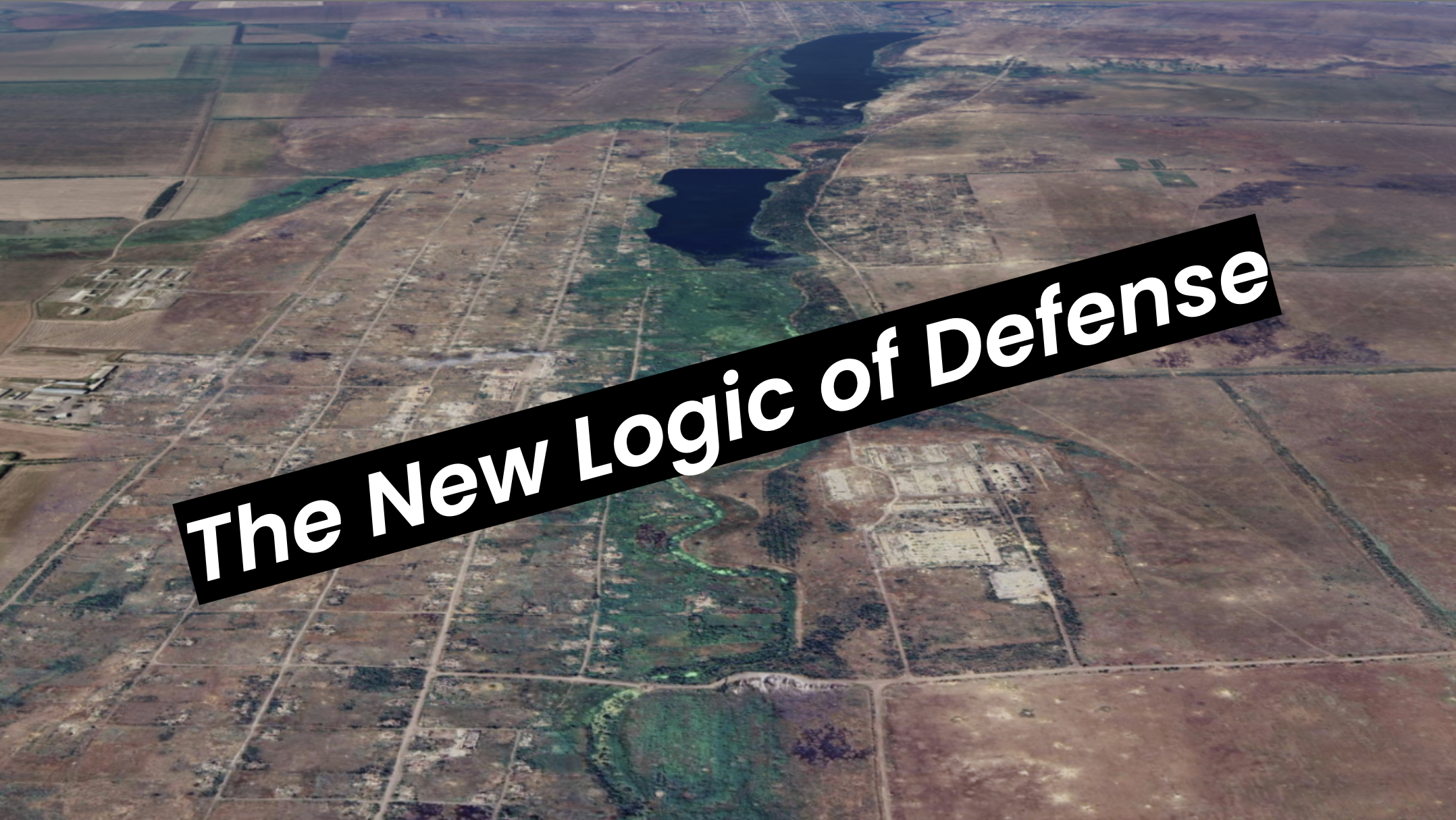
Drones have changed the battlefield by creating a machine layer between soldiers, sensors, and action. AI is now doing the same to brands. Search crawlers, recommendation engines, generative assistants, and autonomous agents increasingly decide what is visible before a human ever gets involved. This is the robot layer: the new condition of being seen
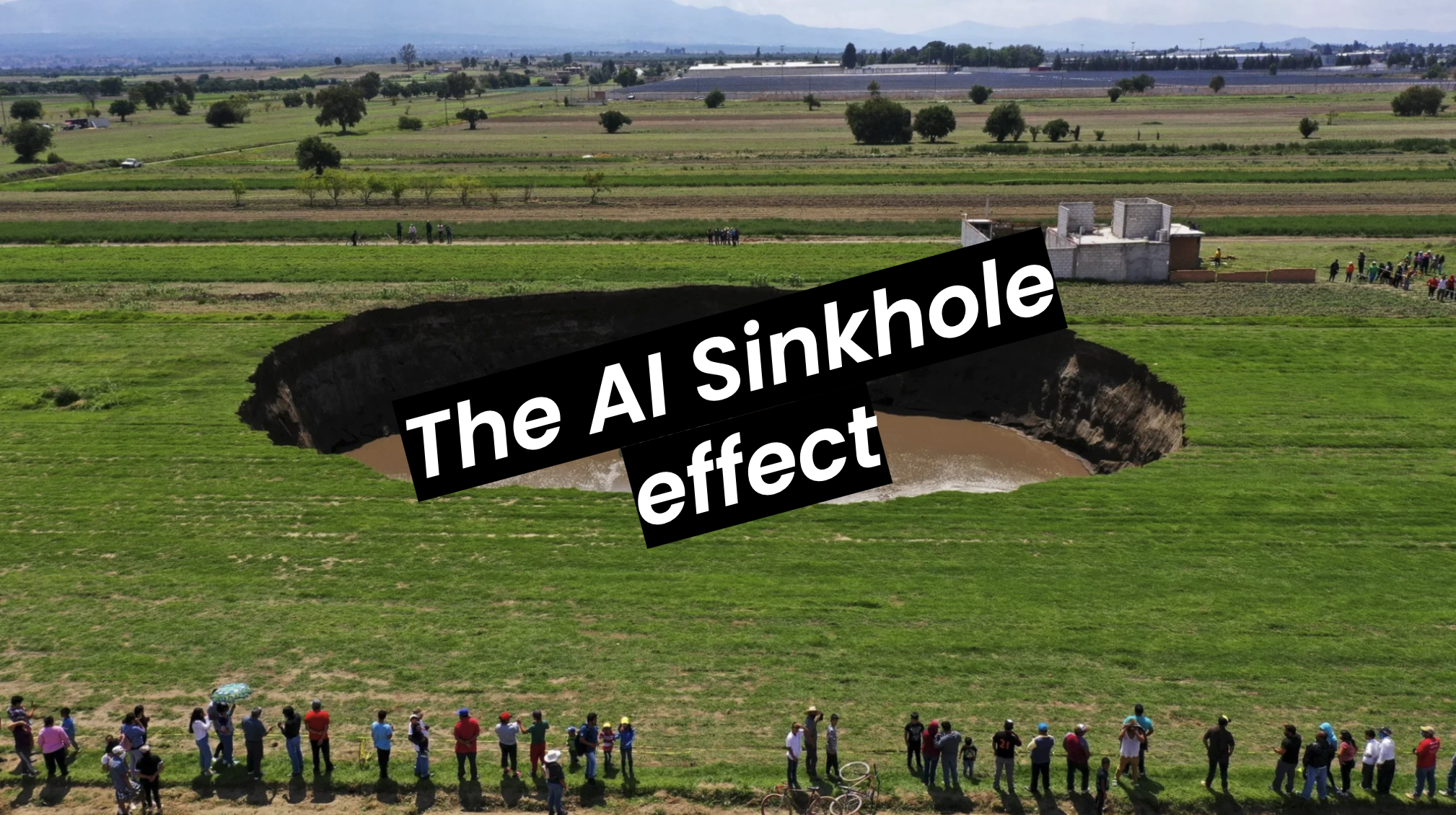
The AI Sinkhole effect
The AI sinkhole effect describes what happens when a general-purpose AI platform starts absorbing the value of the smaller tools built around it. Writing assistants, workflow builders, image tools, productivity apps, and automation platforms do not disappear overnight. They simply become less necessary as the conversational AI layer turns into infrastructure.
The Brand Knowledge Lake
Most brand teams are sitting on a swamp and calling it an archive. Guidelines, campaigns, claims, tone documents, research, decks, product notes, legal caveats, regional edits, and half-dead PDFs are scattered across the business. A brand knowledge lake is the attempt to make that material usable: structured enough for machines, contextual enough for humans, and coherent enough not to turn AI into a very fast generator of brand-adjacent sludge.