Field Notes: B2Believe, Munich, November 2025
In this article I share my notes on a recent Linkedin event I attended.
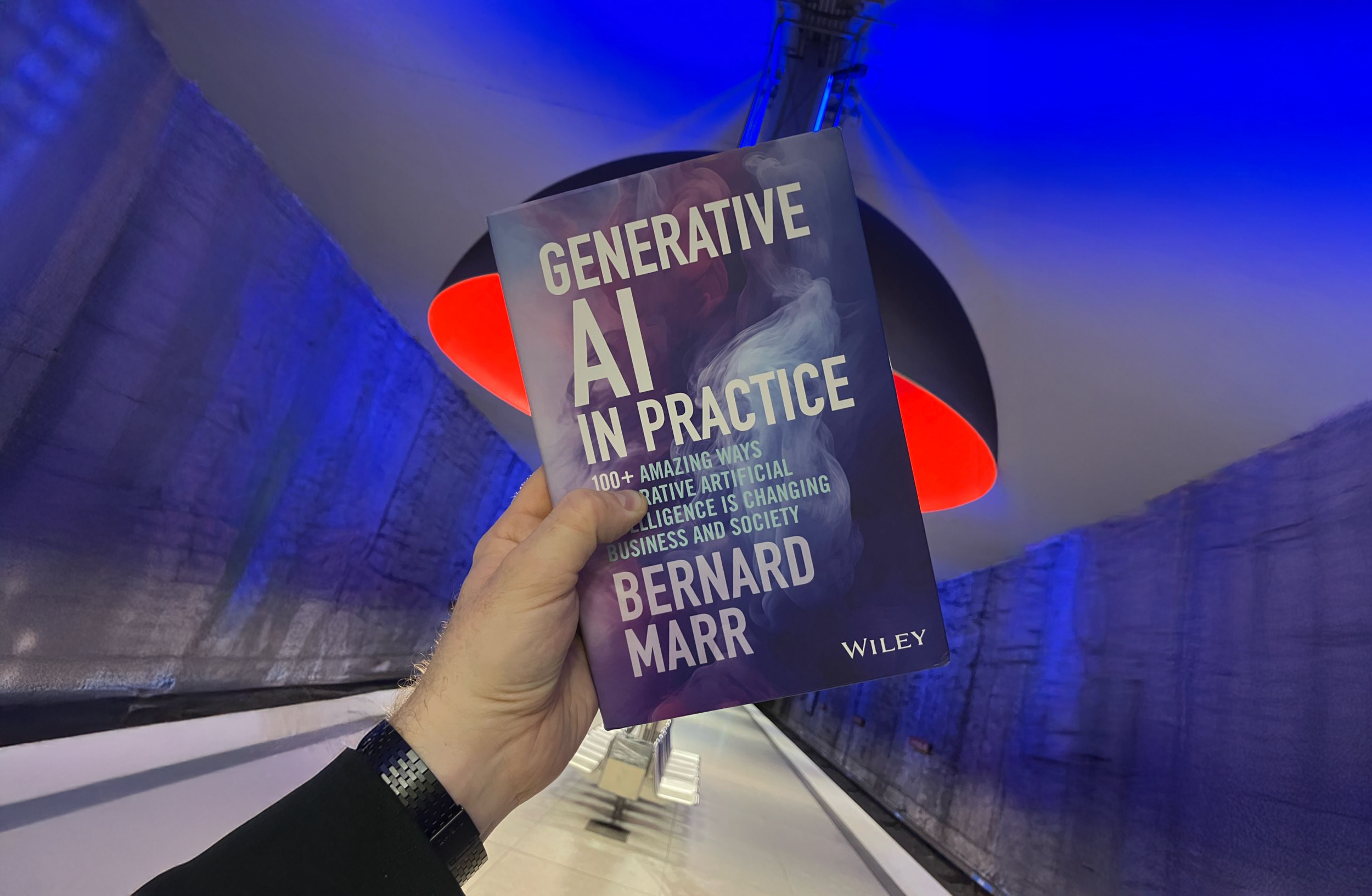
The freebie of choice: Marr, Bernard. Generative AI in Practice: 100+ Amazing Ways Generative Artificial Intelligence Is Changing Business and Society. Hoboken, NJ: John Wiley & Sons, 2024. (Pictured here in the celebrated Westfriedhof station.)
B2Believe didn’t feel like a marketing conference so much as a pressure test. Not of tools or tactics, but of temperament. The underlying question humming beneath every slide, stat, and slogan was simple and brutal: can B2B still earn attention in a feed that no longer cares who you are?
The answer, delivered repeatedly and without apology, was no - not with the old formulas.
The core shift: from brand OR demand to brand X demand
B2Believe collapsed a long-standing B2B false binary. Brand and demand are no longer sequential stages; they’re simultaneous forces, expressed in the same unit: video. Always-on. Short-form. Vertical. Performant.
This wasn’t abstract theory. The numbers were relentless:
Short-form video is now the highest ROI format on LinkedIn
73% of video completion is driven by creator elements—not logos, not polish
Referencing pop culture drives +41% engagement; memes push it to +111%
“Unhinged” storytelling (their word, not mine) can lift engagement by 129%
The implication is uncomfortable for legacy B2B: creativity is no longer decoration—it’s a performance multiplier.
Five signals that actually move the needle:
Across talks and case studies, a clear creative grammar emerged. The videos that work now tend to share five traits:
Cultural coding with intent
Not trend-chasing, but fluency—knowing which references signal “we belong here” and which feel like corporate cosplay.
A human in front of the brand
Not spokespersons. Not avatars. Actual people, with perspective, friction, and voice.
Attention hacking
The first two seconds aren’t an opening—they’re the entire pitch. Miss them and you don’t exist.
Expert takes, unpolished
Let specialists speak like specialists. Authority now reads as specificity, not sheen.
Inspiring imagination
Even in B2B, maybe especially in B2B, audiences want to feel something before they understand anything.
This is why vertical video, 31–60 seconds (or even under 16), consistently outperforms longer, over-explained formats. The feed rewards clarity plus courage, not completeness.
Editorial first, or don’t bother
One of the most resonant refrains, echoed by the team at Siemens was simple:
What do they actually want to hear?
Fit for channel. One channel per person. Editorial instincts before campaign architecture. This marks a quiet but radical inversion of B2B logic: distribution no longer saves weak ideas. Context is the creative.
It also explains the renewed interest in LinkedIn-native formats:
LinkedIn Shows (AI in Action, Founder Blueprints, CEO Playbooks)
Highly contextual pre-rolls placed in front of specific creator content
“First impression” ads—one per day, designed to test, learn, discard
This is B2B behaving less like a brochure rack and more like a living media system.
Declutter, then bet big
Underneath the creative chaos was a surprisingly disciplined commercial message:
Know which product actually drives growth
Know its revenue contribution
Make your biggest creative bets on your biggest product
The stat that landed hardest: 1 in 3 marketers don’t know their top product’s revenue contribution. In a world of infinite content versions (120 Oreo formats as hype mechanics, meme-coin logic applied to brand), focus becomes the real differentiator.
Declutter the message. Amplify distinctive assets. Use category entry points. Make yourself easy to find and easy to remember.
AI isn’t just a tool anymore
B2Believe treated AI less as a productivity layer and more as a structural actor. The phrase that stuck: AI is now a customer.
This reframes everything:
Content isn’t just consumed by humans
Visual culture feeds both people and machines
Marketing intelligence becomes an orchestration of humans and AI agents
Quoting Bernard Marr, the future belongs to artists—not because aesthetics matter more, but because sense-making does. In a hyper-innovative era where even the Metaverse is attempting a return, the brands that win will be the ones that can improvise meaning at speed.
Don’t overthink it
If Digital Cosmos left me with ontological vertigo, B2Believe left me with something sharper: permission.
Permission to move faster than approval cycles.
Permission to be entertaining in serious categories.
Permission to test wildly, learn publicly, and deploy the “big guns” when something lands.
The cheat sheet was almost punk in its directness:
Go wild—boring content dies instantly
The first two seconds decide everything
Let the copyline frame the video
Fuel the whole funnel, not just the click
And maybe the most telling note of all: “Would be cool if the next day you get an invite for a 10-minute call.”
That’s the new success metric. Not reach. Not awards. A crack in the wall of attention.
B2Believe wasn’t about the future of B2B marketing. It was about accepting that the future is already here—and it’s vertical, human, slightly unhinged, and utterly indifferent to how things used to be done.