Zeitung für Deutschland: There can be no European tech sovereignty until Europe gets its act together
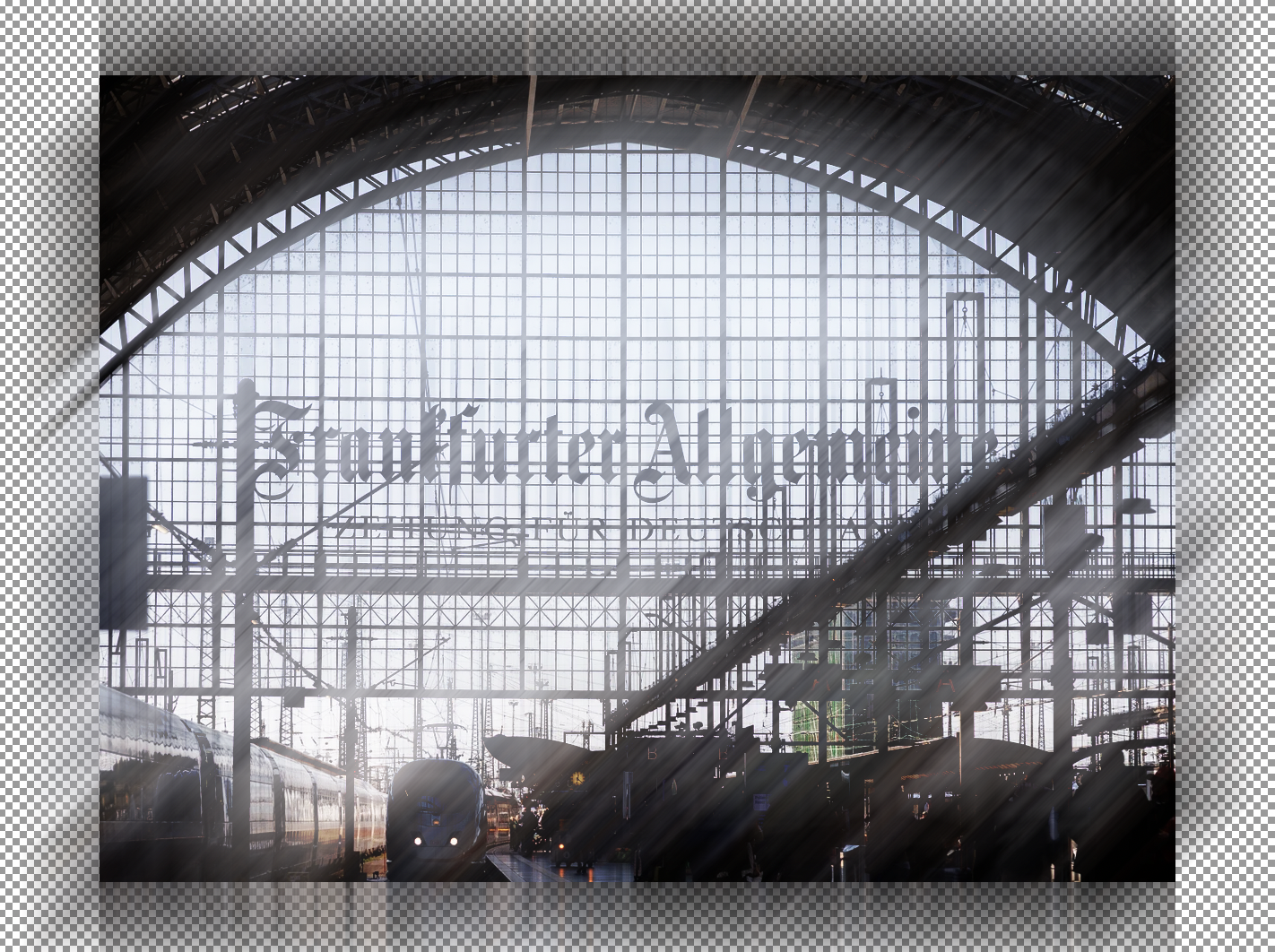
In the hot rage of structural failure, there is only one way forward.
What a delayed train says about the continent’s ability to survive.
It’s 19:45 and I am sitting on a delayed train at Frankfurt Hauptbahnhof, having arrived on another train that was first delayed and then partially cancelled somewhere between Munich and Cologne. I am attempting to do something that, by 2026, should be completely unremarkable: cross part of the European continent without flying. I could be anyone. A business owner travelling to a meeting. A developer heading to a conference. A researcher, an engineer, a nurse, a student. One of the millions of people whose movement, labour and enterprising spirit sustain this unruly civilisation held together, more than anything else, by agreement.
I’ve spent perhaps two hours today dragging my luggage to and from travel centre desks where they can only give me a print-out of a new route and wish me well, and when the train finally arrives it changes platform and hundreds of passengers are forced to run all the way down Platform 2 and back up Platform 4.
FRANKFURTER ALLGEMEINE ZEITUNG FÜR DEUTSCHLAND, it says in enormous letters across the train shed. Well, here’s some Zeitung.
In 2025, only 60.1 per cent of Deutsche Bahn’s long-distance services met the company’s own definition of punctuality: arriving less than six minutes late. Its target for 2026 is not a dramatic recovery but approximately 60 per cent again. Absurdly, rail capacity in Europe has traditionally been organised nationally, annually and, extraordinarily, through heavily manual processes. We’re going to have to wait another four years before the first EU internationally optimised timetables take effect in December 2030. Over the last year there has been a lot of noise about notions of European tech sovereignty, resilience, competitiveness and autonomy. There is a real disconnect here between rhetoric and reality.
Technological sovereignty is not a software category. It is not achieved by passing another regulation, funding a handful of AI start-ups or commissioning a sovereign cloud.
Sovereignty is the ability to make a decision - and cause something to happen.
AI models do not exist in isolation. They depend on data centres, electricity grids, semiconductor supply chains, universities, transport networks, venture capital and governments capable of making decisions at speed. Silicon Valley was not built by software alone. Shenzhen was not built by software alone. Technological sovereignty is the visible expression of a functioning civilisation.
A continent that cannot reliably move people between its major cities, construct power lines, renovate buildings, procure weapons together or turn scientific discoveries into globally scaled companies will not become technologically sovereign by rhetoric.
Trains are not the only problem. They are merely symptomatic of a broader dysfunction that touches every corner of the Union: from its eastern frontier, where drone nets and anti-tank obstacles are once again becoming part of the landscape, to its Atlantic coast, where populations are struggling to adapt to a rapidly changing climate.
Europe is the fastest-warming continent on Earth, warming at roughly twice the global average. In 2025, at least 95 per cent of the continent experienced above-average annual temperatures. Around 48,000 heat-related deaths were estimated across Europe in 2023 alone. Our medieval cities, built to retain heat and resist winter, are becoming ovens. During the 2003 heatwave, approximately 15,000 people died in France, including nearly 1,100 in Paris. Yet millions of Europeans still live in buildings that were designed for a climate which no longer exists.
Air conditioning alone is not the answer. We now have little choice but to rethink our buildings, our public spaces and the way we design our cities. Heat resilience is now a social issue, an architectural issue and, ultimately, a political one. We cannot simply stop functioning every summer.
Finally, defense. Ukraine has demonstrated something Europe should study carefully. Through rapid battlefield procurement and initiatives such as Brave1, it has dramatically shortened the distance between invention and deployment. FPV drones, naval drones and long-range strike systems have evolved in months rather than years, driven by thousands of engineers, start-ups and military units iterating in real time.
Organisationally, many European militaries still think in the age of the Maginot Line: investing heavily in static plans and procurement cycles measured in years. Ukraine has shown what happens when a military behaves more like a software ecosystem than an industrial bureaucracy.
The EU’s 27 countries spent €343 billion on defence in 2024, an increase of 19 per cent in a single year. But collaborative European procurement and defence research remain relatively limited. Europe is purchasing more weapons without yet behaving like a single strategic power.
Germany, the industrial engine on which much of the European economic model was built, endured two consecutive years of recession before growing by only 0.2 per cent in 2025. Real manufacturing turnover fell another 1.3 per cent that year. Private investment had fallen below its 2015 level, weakened by problems in manufacturing and construction.
So what to do?
The old answer would be that Europe needs to innovate: invent more products, create more unicorns and produce more things for people to buy. But what we need to do now is invent things that help us survive.
We need cooling systems, batteries, grids, trains, heat pumps, semiconductors, defence systems, medicines, resilient crops, open-source infrastructure and industrial processes that use less energy and fewer imported materials. We need technology directed towards collective endurance, not merely frictionless consumption.
The European Commission appears to understand parts of this. It has increasingly centred its industrial strategy on technological sovereignty, investing in semiconductors, artificial intelligence, cloud infrastructure and digital resilience. Germany has established a €500 billion infrastructure and climate-neutrality fund, while the EU continues efforts to deepen the Single Market by removing barriers between member states.
These are not trivial measures. They are signs that the political system has noticed the emergency. But the scale remains almost difficult to comprehend. Mario Draghi’s competitiveness report estimated that Europe requires between €750 billion and €800 billion in additional investment every year merely to meet objectives it has already agreed.
That is the real European innovation gap: not ideas, intelligence or capital, but the capacity to combine them and act.
Europe’s single market contains approximately 450 million people, 26 million businesses and around €18 trillion in economic activity. It is the second-largest integrated economy in the world. Yet national regulation, capital markets, energy systems, defence purchasing, railway operators and political vetoes continually break that scale back into smaller pieces.
To my mind, the Europe of today sometimes resembles the German lands of the mid-nineteenth century: economically entangled but politically fragmented, a patchwork of principalities and states with a common market developing ahead of the institutions required to govern it. The Zollverein reduced economic borders between German states, but economic integration alone could not settle the political question.
Europe does not necessarily need to become a centralised nation-state. Its languages, regions and differences are not design flaws. They are the substance of the thing. But it must become capable of acting as one on defence, energy, climate adaptation, digital infrastructure, capital, transport and industrial strategy.
I’ve said it before and I will say it again: Europe must unite or die, and I say this as someone from Britain.
Brexit did not prove that the European Union is perfectly governed. It demonstrated something more fundamental: integration has value, and removing it has costs. Britain’s Office for Budget Responsibility continues to estimate that Brexit will eventually leave UK imports and exports around 15 per cent lower than they would otherwise have been and reduce potential productivity by approximately four per cent. We Britons voluntarily reintroduced friction only to discover that friction is not sovereignty.
The European Union is frequently irritating, opaque and absurd. But there is no political project on Earth quite like it: sovereign nations pooling law, markets and institutions without entirely surrendering themselves. I am tempted to say that its frustration is inseparable from its brilliance, but I think it is time we grew into an ambition beyond ‘it’s a mess but it works.’
Ah, more inaudible announcements waffle through the speakers at Frankfurt Hauptbahnhof. Perhaps my train will reach Utrecht tonight. Perhaps it will not. And perhaps the reason I am so fired up on this is because what awaits me in Utrecht is not a business meeting or a conference. It is my soon-to-be-born daughter and the expectant mother carrying her.
As any expectant father is prone to do, I wonder what Europe will look like when she leaves school, graduates and enters the workforce.
Will she be sharing jokes with other passengers about a clusterfuck of infrastructural failures? Will our railway lines still be buckling in the heat like the wrought iron tentacles of a beleaguered monster? Will the citizens of our cities still be coating their windows white each summer to keep the heat at bay? Will we still be trying to compete against China’s industrial capacity while facing an increasingly militarised Russia?
Will companies still be leaving Europe in order to grow?
Or will we finally have shaken ourselves down and sorted this mess out? My daughter will be born. It is now almost inevitable. The success of Europe is not inevitable, and we Europeans no longer have the luxury of delay.
So what can I do today, still stuck on a train at Frankfurt Hauptbahnhof? Well, as it turns out the chaos has apparently been caused by ‘The Angry Birds Commando.’ I am sure many people will condemn this act, but in my opinion, the way things are, the way things are heading - this kind of action was always going to happen. People drift towards radical action where insufficient action is being taken by the political and social mainstream. The answer now for me is clear;
I invoke the spirit of the ages that folded kingdoms and principalities into something greater than themselves, allowing them to reach beyond the limits of their borders, their histories and their fear.
Europe:
Reach.
Build.
Act.
Because time ran out long ago.
Sources
Deutsche Bahn. Annual Report 2025 – Non-financial Key Figures. 2026. (DB long-distance punctuality: 60.1% in 2025; 2026 target 60%).
European Commission, Directorate-General for Mobility and Transport. New EU Rules Will Improve Cross-Border Rail Traffic and Optimise Network Capacity. 10 June 2026. (Current railway capacity planning remains largely national, annual and manual; first optimised EU timetable expected December 2030.)
Copernicus Climate Change Service. European State of the Climate 2025. (Europe warming at roughly twice the global average; 95% of Europe above-average temperatures in 2025; estimated 48,000 heat-related deaths in 2023.) (Your current source is correct.)
European Environment Agency. Paris Oasis Schoolyard Programme. (Approx. 15,000 deaths in France during the 2003 heatwave, including roughly 1,100 in Paris; urban heat adaptation.) (Your current source is correct.)
European Defence Agency. Defence Data 2024–2025. (EU defence expenditure €343 billion in 2024; collaborative procurement and R&D remain limited.)
European Commission. European Economic Forecast – Germany. (Germany’s two-year recession, 2025 growth of 0.2%, manufacturing decline, weak private investment.)
European Commission. The Future of European Competitiveness (Mario Draghi Report), 2024. (Europe requires approximately €750–800 billion of additional annual investment.)
European Commission. The Single Market. (Approximately 450 million citizens, around 26 million businesses, roughly €18 trillion economy.)
German Historical Institute / Colorado. Material on the Zollverein and nineteenth-century German economic integration. (Economic integration preceding political integration.)
UK Office for Budget Responsibility. Brexit Analysis. (Estimated long-run reduction of approximately 15% in trade and around 4% reduction in UK productivity.)
Brave1. Official Ukrainian defence technology initiative. (Rapid defence innovation ecosystem and procurement model.)