What do we mean by Calibrated Trust?
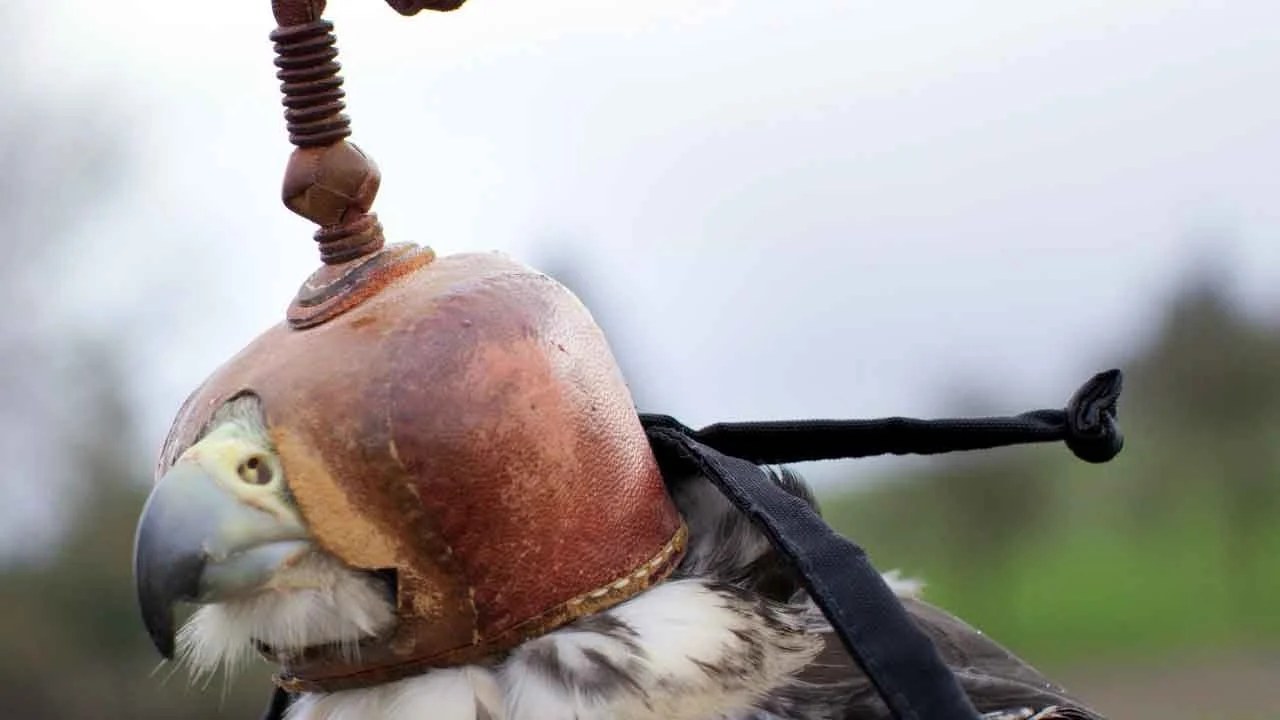
“A peregrine falcon is calmed before a flight,” in GJ Staff, “Hunting With Bird Of Prey: ‘Mother Falcon’ Film,” GearJunkie, August 1, 2016. Photo/video by Joshua Van Patter.
Calibrated trust is what a modern person needs when the old, simpler forms of trust stop working.
The academic literature does not usually phrase it quite that way, because academics are paid to sand the edges off useful ideas. But the substance is there. In human factors and automation research, the central problem is not whether people trust a system. It is whether they trust it appropriately. John D. Lee and Katrina See’s canonical paper on trust in automation puts the issue in exactly those terms: trust matters because it shapes reliance, and the real design problem is achieving appropriate reliance rather than either reflexive acceptance or blanket refusal. Raja Parasuraman and Victor Riley made the same point earlier through a harsher vocabulary: misuse, disuse, and abuse. In other words, systems fail not only because machines break, but because people trust them too much, too little, or in the wrong way.
That is calibrated trust. Not faith. Not scepticism as a personality. Calibration. A match between confidence and actual capability.
This sounds obvious until you notice how little of modern life is built around it. Most of the interface economy still wants one of two things from you: either passive trust or theatrical distrust. The first is the sales pitch. This product is seamless, intelligent, frictionless, personalized, trustworthy. The second is the online posture. Everything is fake, everyone is lying, nothing can be known, smash the system, log back on tomorrow. Both are evasions. The first infantilizes the user. The second excuses intellectual laziness. Calibrated trust is harder because it asks for discrimination. What exactly does this system do well? Where does it fail? How visible are those failures? What are the costs if it is wrong?
Bonnie Muir’s work in the 1990s is useful here because she treated trust in automation as something more structured than mere comfort. People tend to judge automated systems by qualities like predictability, dependability, and competence. This is not mystical. It is practical. You do not need to “believe in” a system in the romantic sense. You need a workable model of how it behaves. That is why trust in machines often looks less like affection and more like instrument reading. You trust a gauge because you know how it drifts. You trust an autopilot because you know when to watch it more closely. You trust a model because you know which tasks turn it into a fabulist.
Recent work on AI has made the point even plainer. A 2024 systematic review in ACM Computing Surveys argues that the objective in human-AI interaction is not maximizing trust, but fostering appropriate trust: trust aligned with the system’s real strengths and limitations. A 2025 paper in Cognitive Systems Research makes a similar move by tying trust and distrust to appropriate reliance rather than to vague positive or negative sentiment. That matters because “trustworthy AI” has become one of those phrases that sounds morally serious while remaining technically evasive. Trustworthy for whom, in what context, under what error tolerance? A chatbot summarising meeting notes and an AI assisting cancer diagnosis do not inhabit the same universe of acceptable failure. Yet public discourse often talks as if they do.
NIST is useful on this point precisely because it is drier and less grandiose than most AI commentary. The AI Risk Management Framework separates trustworthiness of the system from public trust in the system and emphasizes context, risk, and governance. That distinction matters. A system may be impressive on paper and still not deserve much trust in a high-stakes setting. Benchmark performance is not the same thing as justified reliance. The real question is whether the system can be used, monitored, constrained, and audited in a way proportionate to the risk. Or more plainly: can you know when it is likely to help, and when it is likely to make a mess?
This is where calibrated trust stops being a neat phrase from human-computer interaction and starts looking like a general condition of modern life. We live inside thick layers of mediation now. Search engines rank before we read. recommendation systems sort before we choose. scoring systems assess before a human being sees the file. generative systems draft before we think. The machine is no longer just a tool we pick up. It is the first reader, first editor, first gatekeeper, first filter. Under those conditions, naive trust becomes expensive. But indiscriminate distrust is useless. If you distrust every output equally, you become paralysed or ridiculous. The only workable stance is calibrated trust: uneven, conditional, task-bound, alert to failure modes.
The literature also makes clear that calibration is dynamic. It is not a one-time verdict. Trust changes through experience, feedback, transparency, uncertainty cues, error recovery, and observed performance over time. That is why bad design is so corrosive. A system that occasionally fails is one thing. A system that fails opaquely, confidently, and without showing the user where uncertainty lives is much worse. It teaches the wrong lesson. Either users over-rely because the interface looks authoritative, or they under-rely because the thing behaves like a slot machine with corporate branding. Later work on calibrated trust in human-machine teams defines the process explicitly as the user adjusting expectations of reliability and trustworthiness through interaction. In plain English: trust should move when the evidence moves.
There is a broader social point hiding in this. Older institutions often depended on trust as a kind of atmosphere. You trusted the newspaper, the doctor, the bank manager, the pilot, the university, the civil service. Sometimes that trust was deserved. Sometimes it was merely inherited. In either case it was often thick, ambient, and not especially analytical. Modern systems, especially digital ones, have thinned that atmosphere out. Now trust has to be assembled from signals: transparency, track record, incentives, recourse, explainability, auditability, reversibility. We no longer trust because an institution stands there in a hat. We trust because we can see something about how it operates, where it breaks, and who pays when it does.
So calibrated trust is not a mood. It is a discipline of proportion. It says: trust should be specific, earned, revisable, and tied to actual performance in context. That is the academic core of it, and it is a useful corrective to both the syrupy language of “trust-building” and the more adolescent habit of calling every system a scam. The serious question is narrower and more severe.
What, exactly, is this thing good for?
And, just as important, what happens when it is wrong?
That is calibrated trust. Not belief. Not vibes. A confidence level with the sentimentality burnt off.
Sources
Lee, John D., and Katrina A. See. “Trust in Automation: Designing for Appropriate Reliance.” Human Factors 46, no. 1 (2004). `
Parasuraman, Raja, and Victor Riley. “Humans and Automation: Use, Misuse, Disuse, Abuse.” Human Factors 39, no. 2 (1997).
Muir, Bonnie M. “Trust in Automation.” Ergonomics / related trust-in-automation work indexed via PubMed and later trust-calibration literature.
Hoff, Kevin A., and Masooda Bashir. “Trust in Automation: Integrating Empirical Evidence on Factors That Influence Trust.” Human Factors 57, no. 3 (2015).
Mehrotra, S. et al. “A Systematic Review on Fostering Appropriate Trust in Generative AI.” ACM Computing Surveys (2024).
Visser, R. et al. “Trust, Distrust, and Appropriate Reliance in (X)AI.” Cognitive Systems Research (2025).
NIST. “AI Risk Management Framework” and related AI trust materials.