The New Logic of Defense
A New Asymmetry
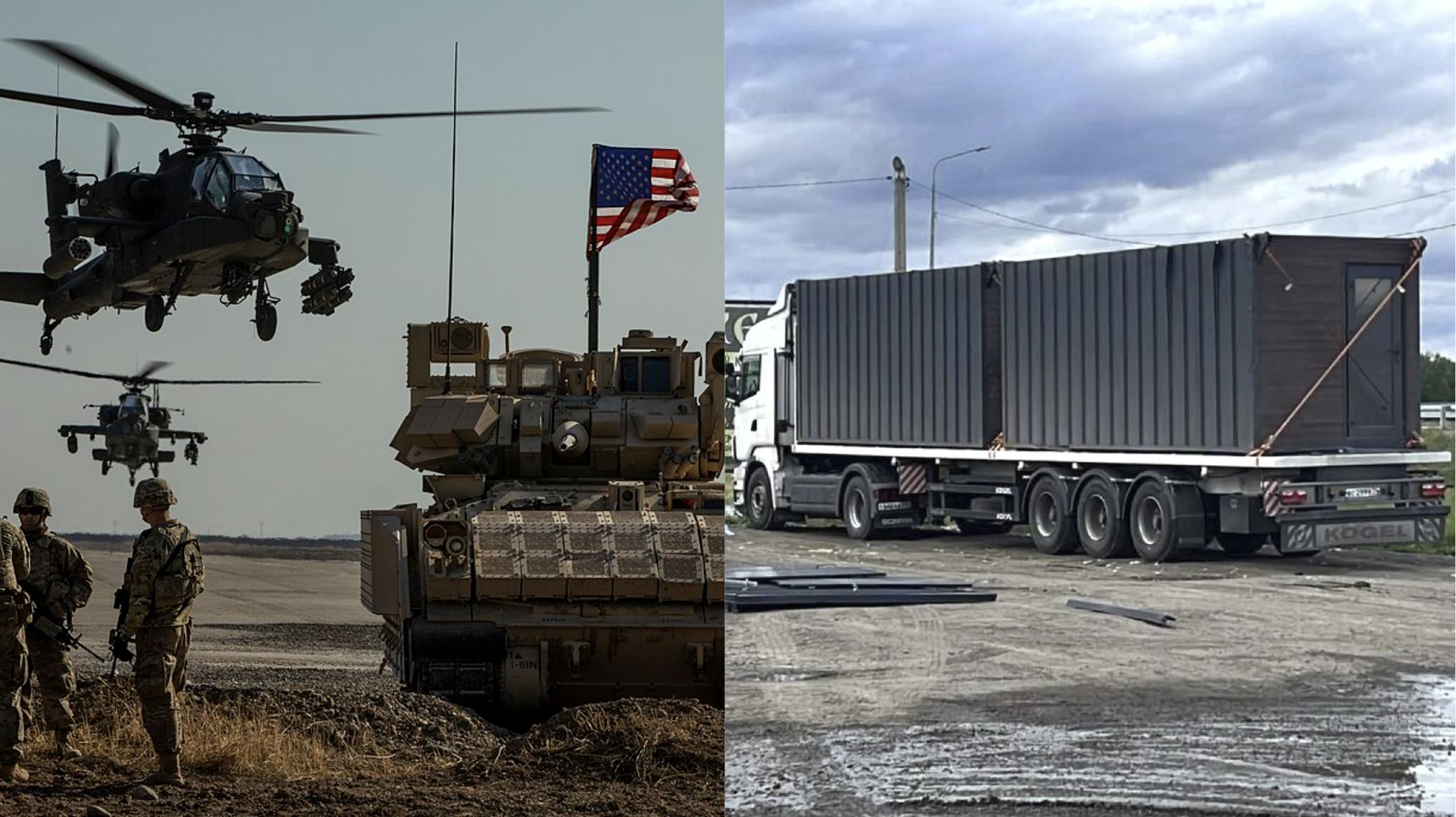
Units of the United States Military deployed as part of Operation Inherent Resolve (2014 - 2021) during the Syrian civil war.
Lorry used in Ukrainian drone attack on Russian bombers, June 1, 2025. (Causing $7bn in damage) Olenya Air Base, Murmansk Oblast, Russia.
When I attended DSEI in 2016 as a photojournalist, many of the stands were talking about asymmetrical warfare. Back then, asymmetrical warfare generally meant a technologically superior opponent facing an inferior one. In practice this could mean an $80,000 FGM-148 Javelin being used to take out a 60-year-old Russian-made T-55 tank. (The tank having been captured from the Syrian army and used by ISIS, then knocked out by US backed Kurdish militia).
Ten years later, asymmetry in warfare works on the same principle, but looks very different. In June 2025 Ukraine launched Operation Spiderweb. Drones concealed in trucks were used to attack multiple Russian airbases, including Olenya in Murmansk Oblast. Ukraine claimed the strikes caused around $7bn in damage. Cheap, widely available drones were being used to threaten some of a major power’s most valuable strategic aviation assets. (The rough cost of a Tu-95MS and a Tu-22M3 is about $100 million a piece.)
This new asymmetry means that the logic of defence that has underpinned Europe’s security since 1945 has now been irrevocably disrupted.
Asymmetry in warfare is not new, but since the escalation of the war in Ukraine in 2022, the flood of drone ‘kill cam’ footage has made it impossible to ignore. Week after week, we have watched high-value targets including tanks, aircraft, ships (and most recently a $16 million Ka-52 attack helicopter) get taken down by swarms of cheap, one-way systems, often piloted from kilometers away. These videos are asymmetry in action, and they have had me returning again and again to this quote from Rudyard Kipling’s ‘Arithmetic on the Frontier.’
“A scrimmage in a Border Station -
A canter down some dark defile -
Two thousand pounds of education
Drops to a ten-rupee Jezail”
Kipling is writing about the ruthless arithmetic of warfare: however well equipped, expensively trained, or technologically superior you may be, determined resistance will always find a way - often the cheapest, simplest, and most brutal one.
An era of new archetypes
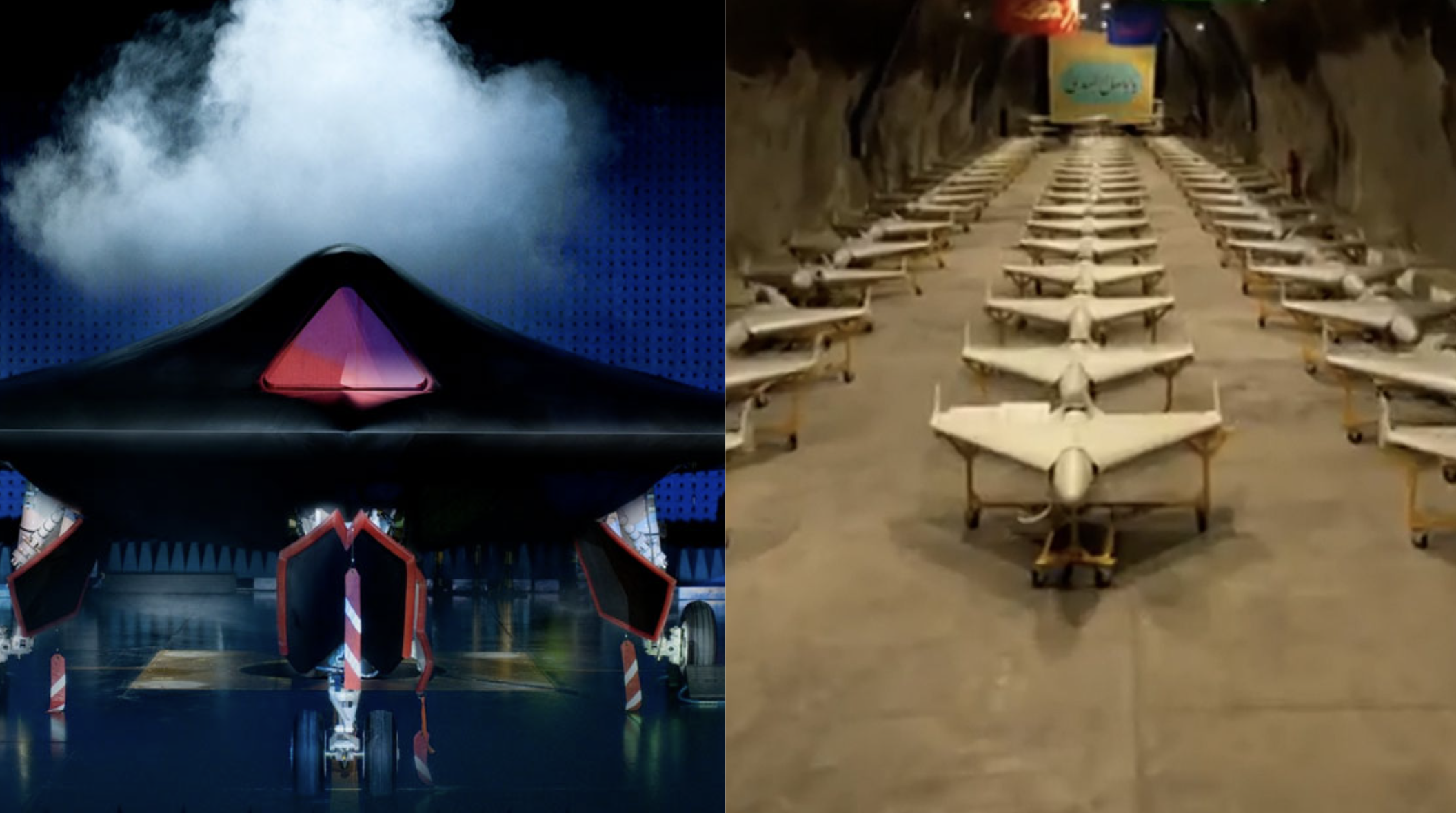
BAE Systems. Taranis Unmanned Combat Air Vehicle Demonstrator. Warton, United Kingdom, 2013.
Iranian Ministry of Defence. Shahed-136 Loitering Munition Production Facility. Tehran, Iran, 2026.
Behind this new asymmetry is the advent of machine-led, autonomous warfare. As I covered in 'All's Fair in Tech and War: The Dawn of the Robot Layer', drones have been flying missions since as early as 7th October 2001 during Operation Enduring Freedom. The idea of a lethal platform being piloted remotely was a watershed moment for military and defence doctrine.
Another moment came with the formal unveiling of the BAE Systems Taranis in 2010, followed by its first flight trials in 2013. Taranis - named after the Celtic god of thunder, and built with contributions from Rolls-Royce, GE Aviation Systems, Smiths Aerospace, and QinetiQ - pointed toward one possible future: the drone as a seventh-generation successor to the manned fighter, few in number, exquisite, and extremely expensive. That future seemed plausible in 2013.
What the last four years of war in Ukraine alone have demonstrated is that the technology took a sharply different path. Ukraine's homemade FPV drones, and the Iranian-designed Shahed-136 sit at opposite ends of that spectrum: cheap, expendable, and deployed at scale.
Area denial
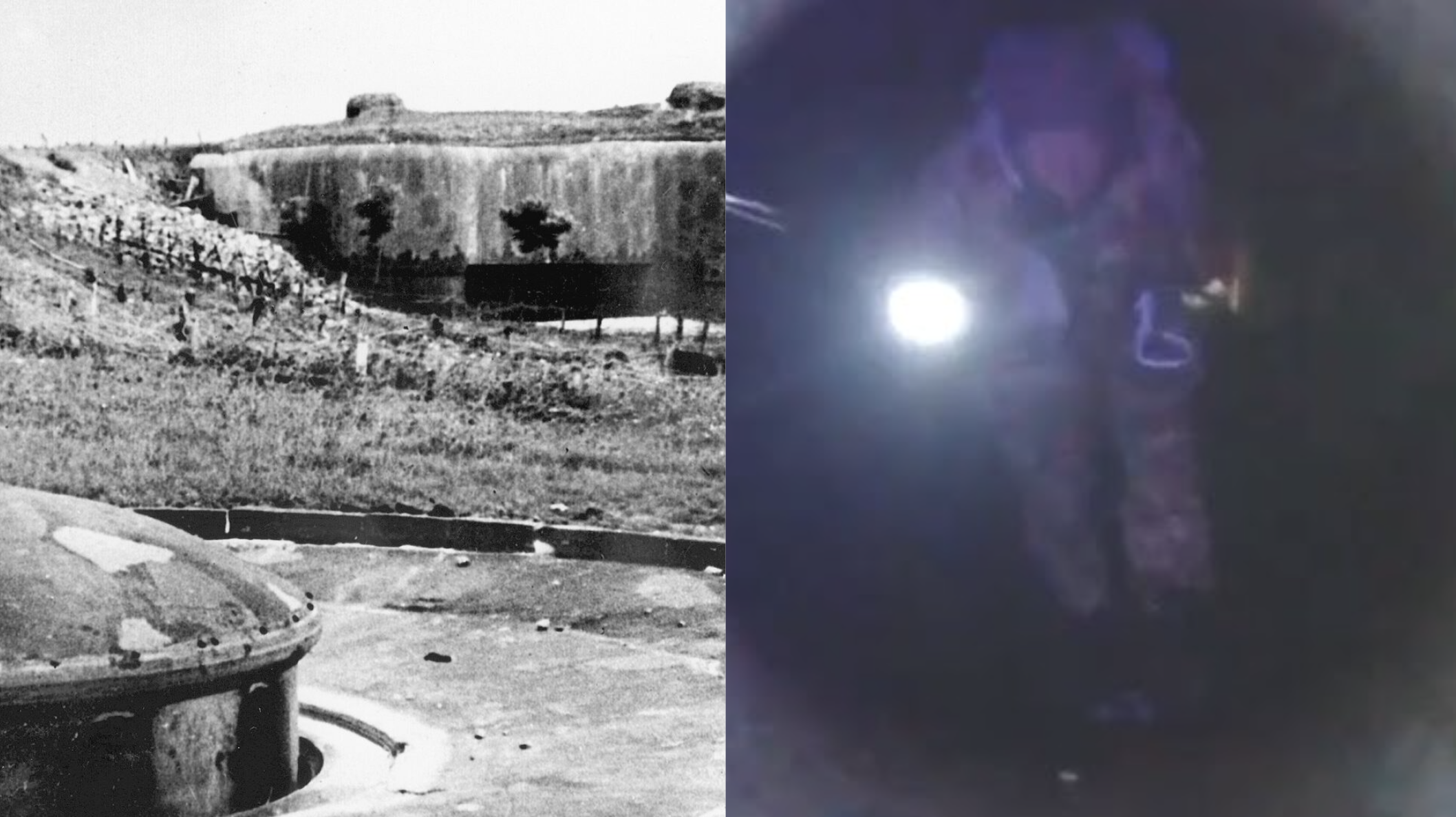
Photographer unknown. Maginot Line fortifications, France, c. 1939–1940. Photograph. History Today.
Sky News, “Russian Forces Creep Through Disused Gas Pipeline in Attempt to Launch Surprise Attack on Ukrainian Soldiers,” March 9, 2025.
The mass use of drones on the battlefield has dramatically changed area denial. From the post World War I period until as recently as the escalation of fighting in Ukraine in 2022, local area denial relied primarily on minefields, anti-tank weapons, artillery, and close air support.
Perhaps the clearest example of area denial from the earlier part of the period was France’s Maginot Line: an elaborate defensive barrier along France’s eastern frontier. Completed in 1938, it was designed to prevent or slow a renewed German attack across the French frontier and force any advancing army into a costly, localised assault against fortified positions.
During the war in Ukraine, however, we have seen area denial - and the battle space itself - change.
The battlefield has become something closer to persistent and layered area denial, maintained by ISR drones, FPV strike drones, precision artillery, and systems such as HIMARS. Rather than denying a narrow piece of ground, these networks can extend surveillance and strike deep across the battlefield, making movement, concentration, and resupply far more dangerous over sustained periods.
HIMARS, for example, is designed to deliver precise fire from long distances while remaining mobile and elusive.
As former Ukrainian commander-in-chief Valery Zaluzhny argued in November 2023, the war shifted toward a new kind of layered defence - one where ISR, precision strike, and autonomous systems don't just hold a line, but make the entire battle space lethal, persistent, and almost impossible to move through undetected.
Battlefield Survivability
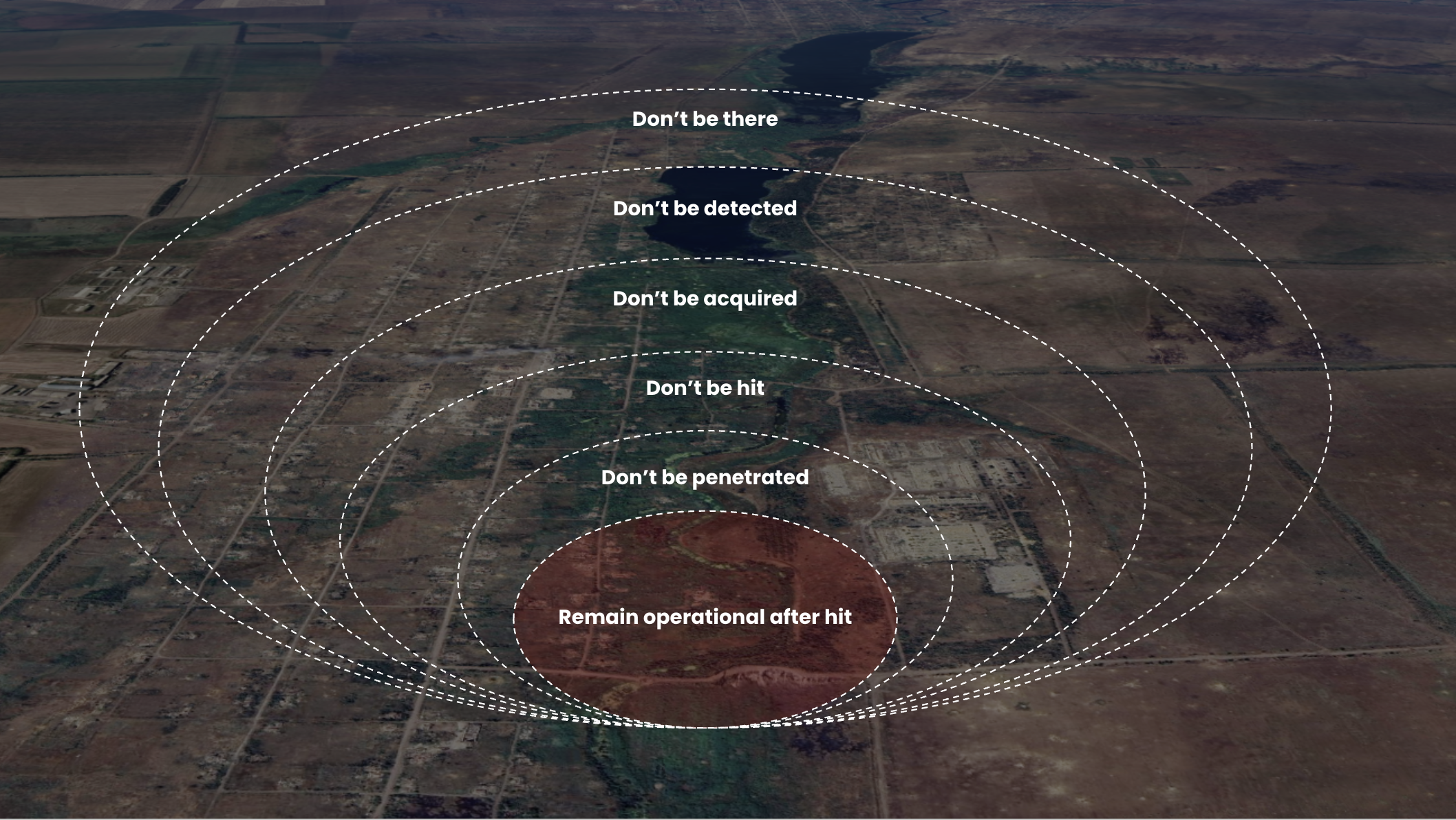
Survivability onion based on Gary L. Guzie, Integrated Survivability Assessment (2004), p. 11, and the later Steve Knott / U.S. Army TARDEC “Integrated Survivability ‘Onion’” diagram (2008).
The oldest rule of battlefield survivability is simple: don't be there. In 2004, the U.S. military built that logic into a formal framework - the Integrated Survivability Assessment, known as the 'Survivability Onion' - layering detection, evasion, and hardening around that core idea.
The sinking of the Moskva in April 2022 was an early warning that the onion was being peeled from the outside in. A capital ship, assumed to be protected by prestige and firepower, was taken down by a combination of precision strike, surveillance, and relatively low-cost attack. Operation Spiderweb extended that logic further: assets deep inside what would previously have been considered secure space are now reachable.
The sinking of the IRIS Dena off Sri Lanka in March 2026 went further still - not just eroding the rules constraining how conflict is fought, but where. A warship sunk in the Indian Ocean by a US submarine, far from any recognised theatre of war, signals that the legal, geographic, and political boundaries once assumed to contain conflict are themselves no longer reliable.
Viewed from 2026, the old rule still holds. The problem is that "there" can now be almost anywhere.
Europe’s Vulnerability
Platforms such as HMS Queen Elizabeth - a 65,000-tonne carrier once considered the apex of maritime power projection - and the Vanguard-class submarines underpinning the UK's nuclear deterrent must be reconsidered in an era of persistent sensing, autonomous systems, and long-range precision strike. Not because they are obsolete, but because the assumption of invulnerability that justified their cost no longer holds.
The threat does not exist only to the platforms themselves. Anduril Industries' January 2025 decision to place Arsenal-1 in Pickaway County, Ohio, beside Rickenbacker International Airport - a strategic air hub dating back to 1942 - reflects the same instinct: put critical manufacturing as deep in the American interior as possible, where geographic depth can still be treated as part of survivability.
Europe, of course, has no such interior. As Ukrainian President Volodymyr Zelensky told Trump on 28 February 2025, it has neither the land depth nor America's "nice ocean" to guarantee its own security. It cannot afford to wait to feel the war from a distance.
Conclusion
As the White Paper for European Defence – Readiness 2030 puts it, “the time has come for Europe to rearm.” But that does not mean a return to big, exquisite systems. It means interoperable, sovereign software; scalable, cost-effective hardware; dense means of threat detection; flexible autonomous effects; and, most vitally, industrial depth - as at Rickenbacker. Together, these are what will allow Europe to impose persistent and layered area denial to the greatest depth, and with the greatest flexibility.
Technology has totally changed warfare. We cannot reverse technology. In 1909, the advent of powered flight meant that war was no longer confined to the battlefield. In 2026, the advent of drones and AI means that war is no longer confined to the traditional geography of war.
The fundamental logic of deterrence is that conflict becomes feasible for an opponent when the risk of failure appears low. That fundamental logic has not changed.
Europe’s task now is to make failure possible again.
Sources
AP News. “US and Iran Spar over Weapons Status of Iranian Warship Sunk by Submarine.” Accessed March 21, 2026. https://apnews.com/article/iran-israel-us-iris-dena-warship-submarine-8789cf718b1ebf8b571cb8ef5d785150
BAE Systems. “Taranis.” Accessed March 21, 2026. https://www.baesystems.com/en/product/taranis
Business Insider. “Anduril Will Build Its Arsenal-1 Munitions Factory in Ohio.” January 2025. https://www.businessinsider.com/anduril-arsenal-1-ohio-factory-defense-manufacturing-2025-1
Creech Air Force Base. “Sun Setting the MQ-1 Predator: A History of Innovation.” By Senior Airman James Thompson. February 14, 2018. https://www.creech.af.mil/News/Article-Display/Article/1442303/sun-setting-the-mq-1-predator-a-history-of-innovation/
European Commission. White Paper for European Defence – Readiness 2030. March 6, 2025. https://commission.europa.eu/document/download/e6d5db69-e0ab-4bec-9dc0-3867b4373019_en
The Guardian. “‘Bit of Treachery’: US Attack on IRIS Dena Undermines Indian Security Ties.” By Hannah Ellis-Petersen and Aanya Wipulasena. March 15, 2026. https://www.theguardian.com/world/2026/mar/15/us-attack-iris-dena-undermines-indian-security-ties-iran
Guzie, Gary L. “Integrated Survivability Assessment.” April 2004. https://www.researchgate.net/publication/235034181_Integrated_Survivability_Assessment
Jayasinghe, Uditha, Idrees Ali, and Phil Stewart. “U.S. Sub Sinks Iranian Warship off Sri Lanka, Killing 87 and Expanding War Zone.” Reuters, March 4, 2026. https://www.reuters.com/world/asia-pacific/sri-lanka-rescues-30-people-board-distressed-iranian-ship-foreign-minister-says-2026-03-04/
Kipling, Rudyard. “Arithmetic on the Frontier.” In Departmental Ditties and Other Verses. Lahore: Civil and Military Gazette, 1886.
Missile Defense Project. “FGM-148 Javelin.” Missile Threat, Center for Strategic and International Studies. Accessed March 21, 2026. https://missilethreat.csis.org/missile/fgm-148-javelin/
The Naval Review. “Warship Vulnerability: Lessons from the Moskva Sinking.” Accessed March 21, 2026. https://www.naval-review.com/news-views/warship-vulnerability-lessons-from-the-moskva-sinking/
Reuters. “Satellite Imagery Shows Ukraine Attack Destroyed and Damaged Russian Bombers.” June 3, 2025. https://www.reuters.com/business/aerospace-defense/satellite-imagery-shows-ukraine-attack-destroyed-damaged-russian-bombers-2025-06-03/
Sky News. “Russian Forces Creep Through Disused Gas Pipeline in Attempt to Launch Surprise Attack on Ukrainian Soldiers.” March 9, 2025. https://news.sky.com/story/russian-forces-creep-through-disused-gas-pipeline-in-attempt-to-launch-surprise-attack-on-ukrainian-soldiers-13324938
U.S. Army. “HIMARS Increase Regional Multi-Domain Capabilities at Southern Fenix 24.” September 3, 2024. https://www.army.mil/article/279372/himars_increase_regional_multi_domain_capabilities_at_southern_fenix_24
Zaluzhny, Valery. “Modern Positional Warfare and How to Win It.” The Economist, November 1, 2023. https://www.economist.com/by-invitation/2023/11/01/the-commander-in-chief-of-ukraines-armed-forces-on-how-to-win-the-war